Food & Consumer Goods
From field to shelf - transforming operations across the food and consumer goods value chain
We help food processors, beverage groups, agricultural cooperatives, and consumer goods manufacturers accelerate product development, secure volatile supply chains, transform manufacturing performance, and build the digital backbone that food safety, traceability, and decarbonisation now demand.
Powered by Mews Labs
Mews Labs embeds advanced analytics, simulation, and AI directly into our food and consumer goods engagements – turning operational data into decision-making advantage.
 Smart formulation
Artificial Intelligence embedded in PLM tools to propose automatic recipes matching the customer brief.
Smart formulation
Artificial Intelligence embedded in PLM tools to propose automatic recipes matching the customer brief.
 Demand forecasting and planning optimisation
Machine learning models that improve forecast accuracy by integrating promotional calendars, weather data, seasonality, and sell-out signals, feeding directly into S&OP and production scheduling.
Demand forecasting and planning optimisation
Machine learning models that improve forecast accuracy by integrating promotional calendars, weather data, seasonality, and sell-out signals, feeding directly into S&OP and production scheduling.
 Supply chain network simulation
Mathematical modelling and scenario simulation to optimise distribution networks, warehouse locations, and transport flows across complex multi-tier supply chains.
Supply chain network simulation
Mathematical modelling and scenario simulation to optimise distribution networks, warehouse locations, and transport flows across complex multi-tier supply chains.
 Energy consumption modelling
Physics-based and hybrid models that identify energy reduction opportunities at site level, simulate decarbonisation investment scenarios, and track performance against targets.
Energy consumption modelling
Physics-based and hybrid models that identify energy reduction opportunities at site level, simulate decarbonisation investment scenarios, and track performance against targets.
 Production scheduling and yield optimisation
Operations research and constraint-based algorithms applied to multi-product, multi-site manufacturing: sequencing, raw material allocation, and co-product maximisation.
Production scheduling and yield optimisation
Operations research and constraint-based algorithms applied to multi-product, multi-site manufacturing: sequencing, raw material allocation, and co-product maximisation.
Explore our expertises
Many challenges sit at the intersection of strategy, operations, and technology. We bring together complementary practices to address them.


Selected Food & Consumer Goods projects


EMEA logistics masterplan and road-to-market transformation
Redesign the logistics and distribution network across 40 EMEA subsidiaries, and transform the road-to-market model for 7 international subsidiaries facing shifting retail channels and margin pressure.

New logistics masterplan deployed.
Distribution cost reduction achieved.
Go-to-market models redesigned per subsidiary to support omnichannel and food service growth.

Decarbonisation and energy efficiency masterplan
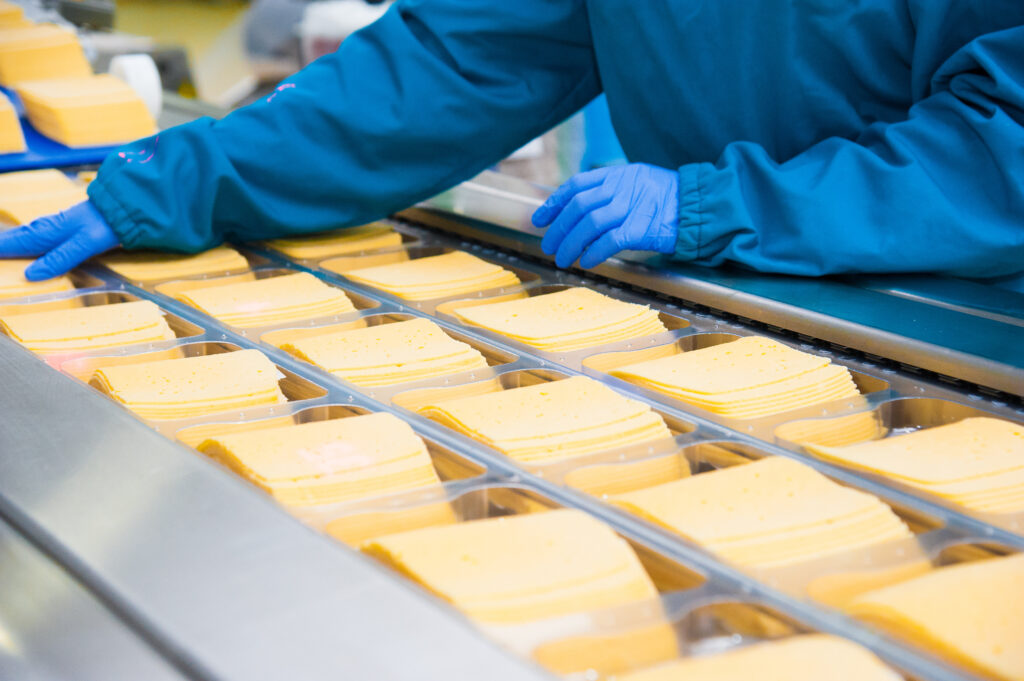
Define a decarbonisation roadmap and energy efficiency masterplan for the Cheese BU's manufacturing sites, covering Scopes 1 and 2 emissions reduction.
Site-level energy masterplan delivered.
Priority investments identified.
Decarbonisation trajectory aligned with group sustainability commitments.

Dairy production planning optimisation
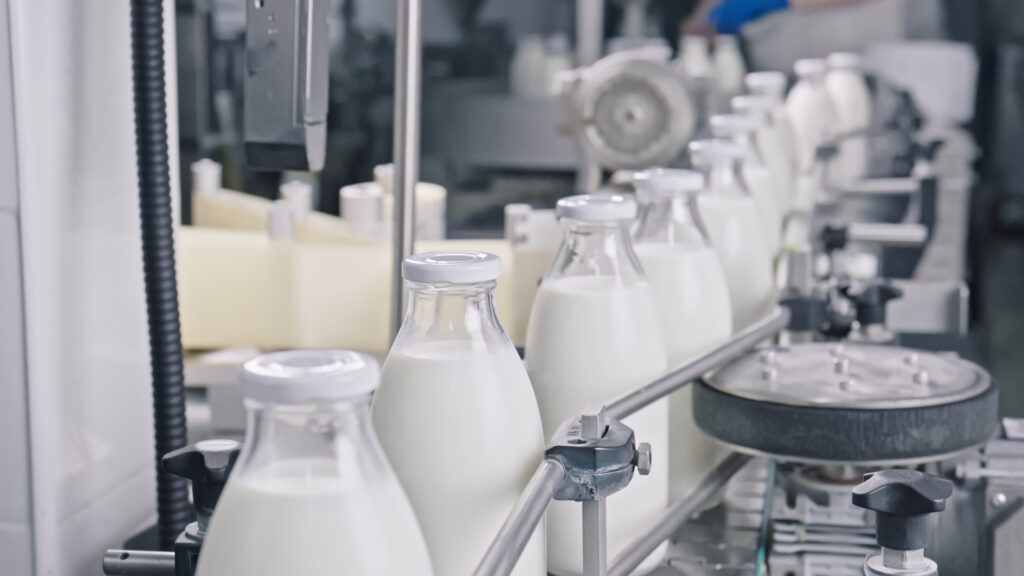
Replace manual planning processes with an agile, constraint-based scheduling tool capable of optimising dairy production across multiple sites with shared resources and seasonal demand variability.
Anaplan-based planning solution deployed.
Scheduling cycle reduced from days to hours.
Planners shifted from data consolidation to exception-based management.


PLM, from scoping to deployment
Alignment of multi-sites entities on R&D & Quality processes and single digital solution to replace existing PLM.
Single tool deployed across countries, improving data continuity, data exchanges and efficiency.
Our Food & Consumer Goods clients









Meet our Food & Consumer Goods experts
Our food and consumer goods partners bring hands-on experience across the full value chain – from agricultural cooperatives and processors to multinational food and beverage groups.





From field to shelf - and everything in between
Whether you are accelerating product launches, redesigning your supply chain, transforming your plants, or building the digital backbone your operations need – we bring the sector expertise and operational depth to make it work.
Get in touch