Automotive & Mobility

Accelerating the Transformation of European Automotive

We help European OEMs, Tier 1 suppliers, and emerging mobility players navigate the shift to electrification, software-defined vehicles, and new industrial models – combining deep R&D and PLM expertise with operational performance and data science capabilities.
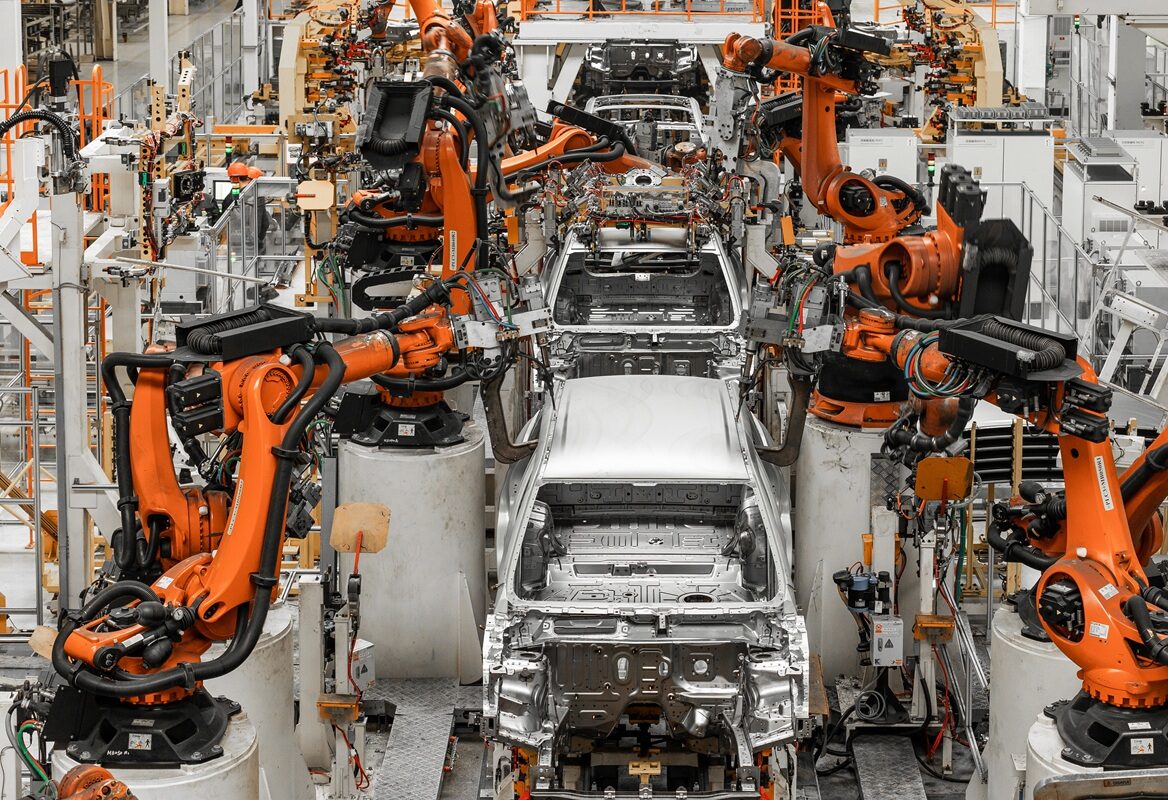
THE AUTOMOTIVE CHALLENGES WE HELP YOU SOLVE

Few industry transformations in living memory have been this multidimensional. European OEMs, Tier 1 suppliers, and mobility players must simultaneously compress development cycles to match new entrants, master the software-defined vehicle, rebuild their industrial base for electrification, and comply with a new generation of sustainability and traceability regulations – all with resources under pressure. Four strategic imperatives define the decade ahead. 

01

Competing on cost and speed in a market reshaped by new players

European OEMs and suppliers are losing ground on development lead times and cost competitiveness. New entrants – particularly from China – are delivering vehicles to market in half the time, at significantly lower cost, with aggressive technology integration. The response cannot be incremental: it requires a fundamental rethink of how vehicles are designed, engineered, and industrialised. Platform strategies, modular architectures, and generative AI in engineering are no longer options – they are survival imperatives.

Design-to-Cost & Value Engineering
Embedding cost and manufacturability targets from the earliest design phases to close the competitiveness gap
Modular Product Architectures
Designing platform strategies that maximise component reuse across vehicle families and derivatives
R&D Process Acceleration
Streamlining development workflows, gates, and engineering collaboration to compress time-to-market without sacrificing quality
GenAI in Engineering
Leveraging Mews Labs capabilities to deploy AI-assisted design, simulation, and technical documentation
02

Engineering the software-defined vehicle

The car is becoming a constantly evolving software platform. ADAS, over-the-air updates, infotainment, vehicle-to-everything connectivity, and mobility-as-a-service are transforming what a vehicle is – and how it is developed. For engineering organisations built around mechanical and hardware disciplines, this means rethinking processes, tools, and organisational structures. Application Lifecycle Management must coexist with PLM. Cybersecurity becomes a design constraint. And the talent profile of R&D teams must evolve fundamentally.

ALM & PLM Integration
Building digital continuity across software and hardware engineering disciplines - bridging the gap between mechanical, electronic, and software development
MBSE Deployment
Implementing model-based systems engineering to manage the complexity of mechatronic and software-intensive vehicle architectures
R&D Organisation Transformation
Redesigning engineering organisations, processes, and governance to integrate software development at scale
Cybersecurity & Data Architecture
Ensuring secure, scalable data management frameworks for connected and autonomous vehicle ecosystems
SUMS Architecture
Supporting digital continuity from product design to aftersales and all associated data management rules, to enable software updates, new functions, and services for existing vehicles
03

Transforming supply chains and manufacturing for the electric era

The shift to electric powertrains is not merely a technology change – it is an industrial reconstruction. Entire supplier ecosystems must be rebuilt around batteries, power electronics, and EV-specific components, while production lines must transition from internal combustion to electric assembly – often simultaneously, under cost pressure, without disrupting current output. For OEMs and Tier 1 suppliers, this demands a wholesale transformation of sourcing strategies, manufacturing operations, and industrial organisation.

EV Supply Chain Reconfiguration
Redesigning sourcing strategies and supplier networks for EV-specific components, battery materials, and evolving localisation constraints
Manufacturing Transition
Driving production line transformation from ICE to EV whilst maintaining operational performance and quality standards throughout the transition
Industrial Performance & Capacity Planning
Optimising production ramp-up, capacity allocation, and line performance during a period of simultaneous model coexistence
Operational Analytics
Deploying Mews Labs capabilities to support production performance monitoring, quality analytics, and ramp-up optimisation in a fast-changing manufacturing environment
04

Building supply chain resilience through sustainable industrial transformation

The fragility of automotive supply chains – exposed by the semiconductor crisis, geopolitical tensions, and trade tariffs – has become a structural liability. Critical dependencies on rare earths, battery materials, and concentrated supplier networks create risks that compound with every new disruption. Reducing this exposure requires rethinking not just sourcing strategies, but the design of the vehicle itself: how materials are chosen, how they circulate, and how they are recovered at end-of-life. A new generation of regulatory requirements – Digital Product Passport, Euro7 – is accelerating this rethink across the industry.

Eco-Design & Circularity
Integrating lifecycle analysis, recyclability targets, and end-of-life management into product architecture from the earliest design phases – turning circular economy into a lever for reducing strategic dependencies on critical raw materials
Supply Chain Risk & Resilience
Building risk visibility, dual-sourcing strategies, and supplier monitoring to reduce exposure to geopolitical shocks, tariffs, and critical material concentrations
Sustainable Value Chain Transformation
Redesigning the processes, organisations, and digital frameworks that connect product design decisions to supply chain management and traceability requirements
Supply Chain Analytics
Deploying Mews Labs predictive models for resilience planning, supplier risk scoring, and demand sensing across a volatile supply base

Powered by Mews Labs

Mews Labs supports automotive transformation with advanced modelling and AI from engineering to operations.

AI-Assisted Engineering AI-Assisted Engineering Supporting design exploration, simulation acceleration, and technical knowledge reuse.
Supply Chain Risk Analytics Supply Chain Risk Analytics Predicting vulnerabilities and bottlenecks across supplier ecosystems.
Production Optimisation Production Optimisation Improving sequencing, planning, and resource allocation in complex plants.
Battery & Lifecycle Analytics Battery & Lifecycle Analytics Modeling performance, ageing, and sustainability impacts across product lifecycles.

Selected automotive projects

Our automotive & mobility clients

Meet our automotive & mobility experts

CTA Background

Ready to accelerate your automotive transformation?

From R&D acceleration to supply chain reconfiguration, from software-defined vehicles to manufacturing performance – we can help.

Get in touch with an expert